
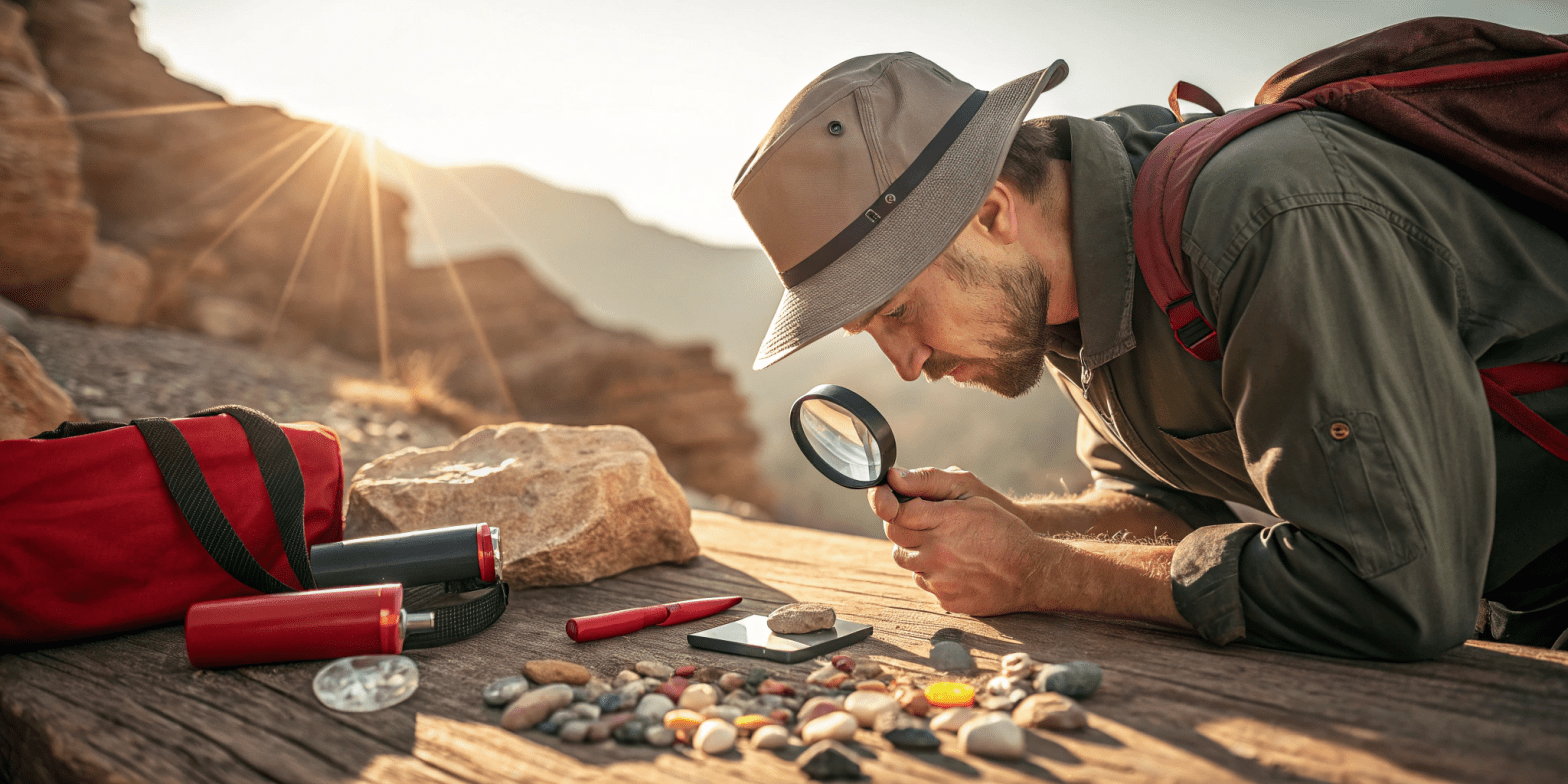
Don’t just guess—here’s how to know what you’ve got in your hand.
So you found a cool rock. It’s shiny. It sparkles. It might be something valuable—or it might be glass. Welcome to the world of gem hunting, where half the thrill is figuring out what you’ve actually discovered.
This quick-start guide walks you through the basics of gemstone identification, so you can stop asking Reddit and start knowing for yourself.
1. Know Your Categories: Precious vs. Semi-Precious
Let’s clear one thing up: “precious” and “semi-precious” aren’t about real value—they’re marketing terms. Traditionally:
- Precious = diamond, ruby, sapphire, emerald
- Semi-precious = everything else (but some of these can be more valuable than “precious” stones)
Don’t judge a gem by its category. Judge it by rarity, clarity, and demand.
2. Learn the Big 5 Physical Properties
Here’s how pros ID stones:
- Color: Look at hue, tone, and saturation. But don’t rely on this alone—some fakes are spot-on.
- Hardness: Use the Mohs scale. For example, quartz = 7, diamond = 10. Try scratching the stone with steel or glass (carefully).
- Luster: How does it reflect light? Glassy (vitreous), metallic, dull?
- Transparency: Is it clear, translucent, or opaque?
- Streak Test: Rub the stone on unglazed porcelain. The streak color can be a giveaway.
3. Tools You’ll Want
You don’t need a full lab setup, but these help a ton:
- 10x loupe – see inclusions and surface details
- Streak plate – unglazed porcelain tile
- Hardness kit – scratch testing set
- UV light – some gems fluoresce
- Digital scale & caliper – for weight & dimension
- Gem ID apps – not perfect, but good for quick checks
✅ Affiliate tip: You can grab a solid beginner gem ID kit on Amazon or AliExpress for under $30.
4. Fakeouts to Watch For
- Glass or quartz dyed to look like rubies or emeralds
- Synthetic stones (lab-made, not fake—but still not natural)
- Doublets/triplets: layered stones meant to fool buyers
5. Practice Makes Precision
Start IDing common stones first: quartz, amethyst, garnet, topaz. Get a feel for what real gems look and feel like. Visit rock shops or gem expos and handle verified specimens. Your hands and eyes will get smarter over time.
6. Next Steps
Once you can ID basic gems, level up:
- Learn regional stones (what shows up in your area)
- Join rockhounding groups online or in person
- Invest in better tools as you go
You’ll go from guessing to expert mode in no time.
Final Word:
Gem hunting is part science, part intuition. The more you practice, the better you get. And remember—sometimes the real treasure isn’t just the gem, but the story of how you found it.

 crebspark.com