
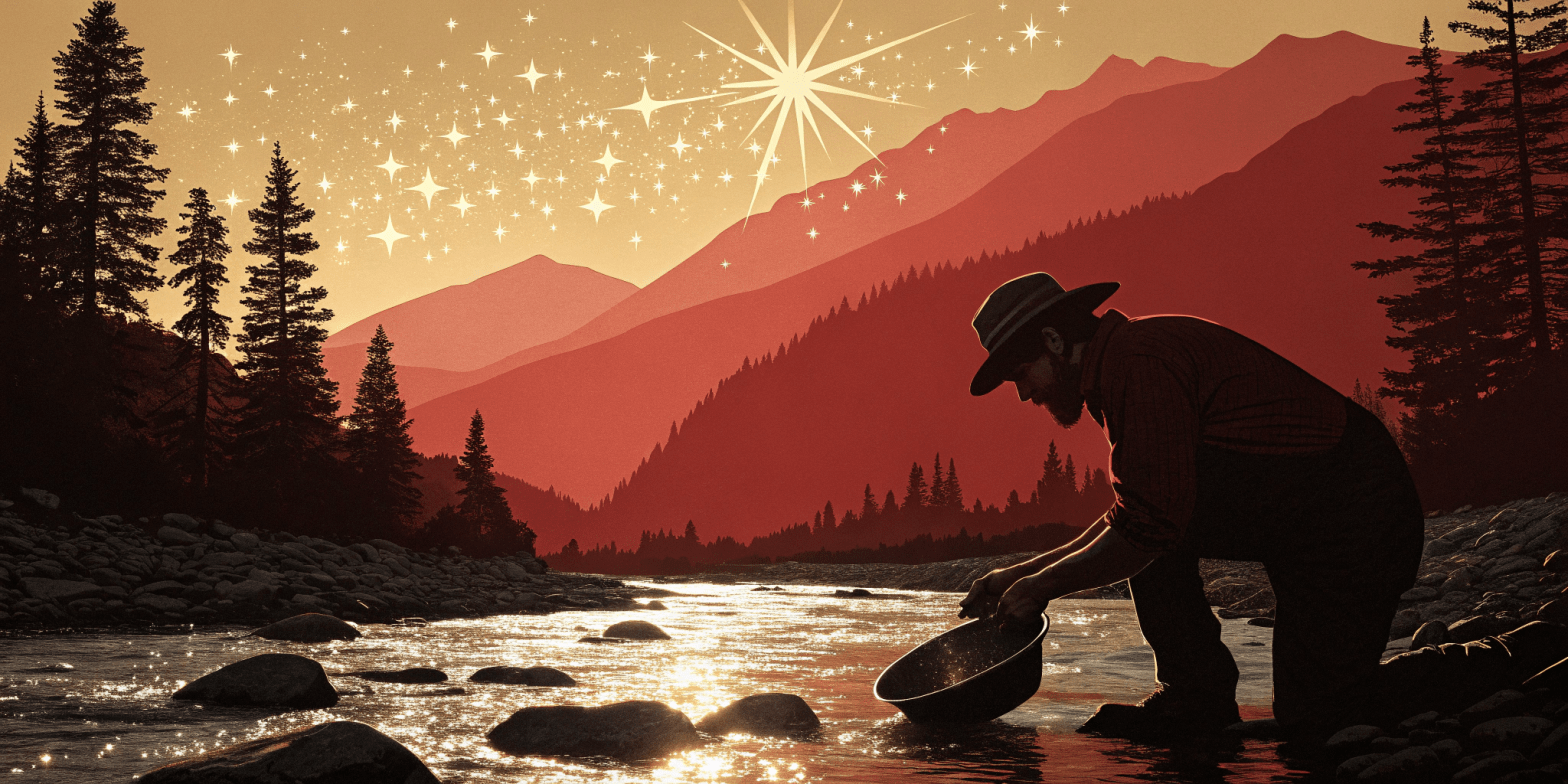
Tools, Tips, and Locations for Modern-Day Prospectors
Gold panning is more than a nostalgic pastime—it’s a real way to connect with the land, unplug from the digital grind, and maybe even pocket some profit. With gold prices holding strong and interest in outdoor survival booming, 2025 is shaping up to be a golden year for new prospectors.
This guide walks you through the basics—what to bring, how to pan, where to go, and what to expect.
Why Gold Panning Still Matters
Gold has never lost its value. From the California Gold Rush to the modern-day backyard prospector, humans have chased the yellow metal for wealth, freedom, and the thrill of the hunt.
Now, with more tools available, online paydirt, and access to real-time gold prices, beginners can start small—and smart.
What You’ll Need to Start
You don’t need much to get going. A basic gold panning kit fits in a backpack and can be used almost anywhere water flows.
Bare Essentials:
- Gold pan (10″–14″, plastic with riffles)
- Classifier (mesh sieve to remove rocks)
- Snuffer bottle (to collect flakes)
- Vial or tube (to store your gold)
- Small shovel or trowel
- Paydirt kit (optional, good for practice at home)
💡 Tip: Most kits can be found online. Look for affiliate sellers offering GPAA-certified gear or starter bundles on Amazon, eBay, or niche outdoor retailers.
How to Pan for Gold in 4 Steps
- Scoop up dirt from a gold-bearing area—inside river bends, behind large rocks, or near exposed bedrock.
- Submerge the pan in water and shake it to settle heavy materials.
- Tilt and swirl gently, allowing lighter material to wash over the edge.
- Inspect what’s left—black sand, garnets, and (hopefully) gold flakes. Use your snuffer to collect the gold.
Gold is nearly 20 times heavier than water. That weight difference is your biggest ally.
Where to Pan in 2025
The best gold panning spots are often old mining areas or natural waterways with slow-moving sediment.
Notable Locations:
- American River, CA – Heart of the Gold Rush
- Clear Creek, CO – Public panning zones
- Nome, AK – Serious yields for serious prospectors
- Dahlonega, GA – Lesser-known but historic
- Sibuyan Island, PH – Off-grid and full of legends
Always check local regulations. Some areas require permits, while others are private land.
Should You Try Paydirt?
Yes—especially if you’re just learning or not near a good panning site.
Paydirt is pre-bagged sediment from gold-rich areas, sold online. It gives you a realistic panning experience, though ROI varies. Look for reputable sellers that disclose expected yields and don’t salt the bags with fake nuggets.
Pro Tips for First-Time Prospectors
- Gold hangs out near black sand. That’s a good sign.
- After rainfalls, rivers shift—sometimes uncovering fresh flakes.
- Don’t rush. Most beginners lose gold because they pan too fast.
- Log everything. Track your spots, pan type, and weather. It pays over time.
Final Thought
You won’t get rich on day one. But gold panning gives you something more valuable: time outdoors, meditative movement, and the primal thrill of finding treasure.

 crebspark.com